An in-house video editor is usually the better fit when your brand has a steady volume of similar edits and someone internally can direct the work. An editing agency is often better for variable workloads, specialist post-production or campaigns that need several skills at once. Compare the complete workflow, not just a salary against a project quote.
The choice is rarely about which team makes "better videos" in the abstract. It is about how much footage you produce, how quickly you need decisions, what skills the work requires and who will supply the brief. A Delhi NCR business publishing weekly founder clips has a different production problem from a brand launching one detailed film each quarter.
Before choosing, list the videos you expect to deliver over the next three months. Include formats, frequency, footage sources, languages, review rounds and deadlines. That simple inventory makes the comparison far more useful than asking for one generic editing price.
When does an in-house editor make sense?
An employee can learn your products, stakeholders and visual preferences over time. They can join quick discussions, locate internal footage and respond to frequent small changes. This can be valuable when your team publishes repeatable content every week and can keep an editor meaningfully occupied.
But an editor is not automatically a producer, scriptwriter, motion designer, sound specialist and social strategist. Define which parts of the process the role will own. If the marketing lead still needs to write every brief, arrange shoots, approve claims and distribute each video, include that internal time in the plan.
An in-house setup also needs equipment, software, secure storage, a feedback process and cover during leave or peak periods. These are manageable commitments, but they should be deliberate rather than discovered after hiring.
When is an editing agency the better fit?
An agency is useful when demand changes month to month or a campaign requires a mix of skills. A product launch might need a story edit, colour work, sound cleanup, captions, motion graphics and several vertical versions. It may be more practical to buy that defined capacity for the project than hire one person and expect them to do everything.
The trade-off is handoff. An outside team needs organized footage, brand assets, context and one person who can consolidate feedback. If every stakeholder sends conflicting notes, even a strong agency will struggle to produce a clear edit on time. Our video editing brief checklist shows what to prepare before asking for a quote.
For teams in Noida, Delhi or Gurugram, location matters most when filming or in-person reviews are part of the job. Remote editing can work well when files, approvals and communication are planned properly. Ask the agency to describe that process rather than assuming proximity alone will solve it.
What should you compare beyond the headline cost?
Compare the total work each option will actually deliver. A salary covers an employee's time, not necessarily all production resources. An agency fee covers an agreed scope, not unlimited revisions or every new idea. Put the following items in separate rows:
Monthly volume and types of finished videos.
Available footage and responsibility for any new shoot.
Story development, graphics, sound, colour and captions.
Turnaround for a first cut and for each review round.
Extra versions for different platforms or languages.
Equipment, software, storage and file transfer.
Who owns the final files and whether project files are included.
Avoid comparing one editor's pay with a proposal that also includes filming and strategy. Ask for matching scopes first. If you need a wider production programme, our guide to video content retainers in Delhi NCR helps separate planning, shooting and post-production.
Could a hybrid model work better?
Yes. A brand with steady daily edits may keep an in-house editor for routine publishing and use an agency for a brand film, campaign launch or overflow. Another team may do the reverse: capture simple footage internally and send selected projects to an external editing partner.
The key is to assign ownership clearly. Decide who chooses the story, approves factual claims, handles urgent changes and archives master files. Keep naming conventions and brand assets consistent across both teams so the viewer sees one brand rather than two editing styles.
For example, a founder-led company could have an internal marketer record weekly updates, while an agency turns the strongest footage into polished website and advertising edits. This is an illustrative workflow, not a claim that one arrangement suits every business.
How do you make the decision?
Run a small, representative test. Give each option the same footage, audience, required deliverables and review window. Evaluate the questions they ask, the clarity of the first cut, how feedback is handled and whether the files are delivered in usable formats. One finished video is more informative than an impressive showreel alone.
Choose in-house when the work is consistent enough to justify a dedicated role and you can manage that person well. Choose an agency when you need flexible capacity or specialist work with a defined scope. Choose hybrid when routine output and occasional complex campaigns are both important.
Frequently asked questions
Is an in-house video editor always cheaper?
Not necessarily. Compare the work delivered over time, including management, equipment, software and specialist support. An agency can be efficient for intermittent projects; a dedicated editor may fit a reliable, high-volume workload.
Can an agency edit footage our team filmed?
Often, yes, but ask for a footage review before agreeing on the scope. Picture quality, audio, shot coverage, file formats and rights to use the material all affect what can be made from it.
Who should own the source files and final videos?
Agree on delivery, access, retention and permitted use in writing. Do not assume editable project files or raw footage are included just because you receive the finished video.
What is the fastest way to compare options?
Create one realistic brief, list the required formats and deadline, and ask how each option would deliver it. Compare process and output against the same work rather than comparing unrelated price figures.
Does Cosette Media offer editing-only work?
Discuss your footage and requirements with Cosette Media. Explore our editing and post-production services to see how an external team could support your workflow.
Build the right editing workflow
Whether you have an internal team or are starting from scratch, Cosette Media can discuss a scope for editing, post-production or a broader video programme. Share the footage you have, the formats you need and your deadline at [email protected] or call +91 92115 08493. We can then talk about the work involved without pretending one package fits every brand.
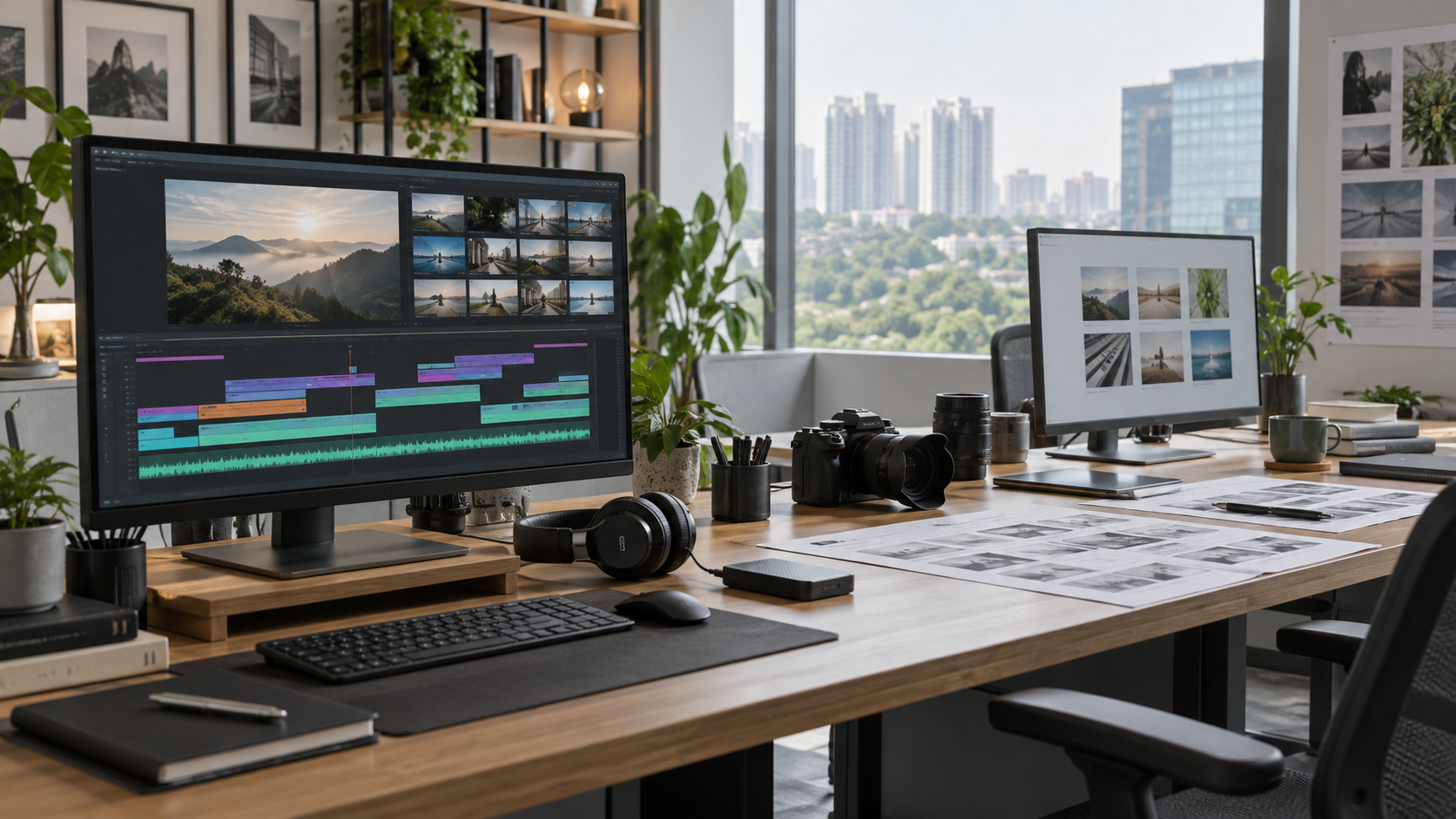
By Cosette Media. The cover is an AI-generated editorial image, not a photograph of our studio or client work.