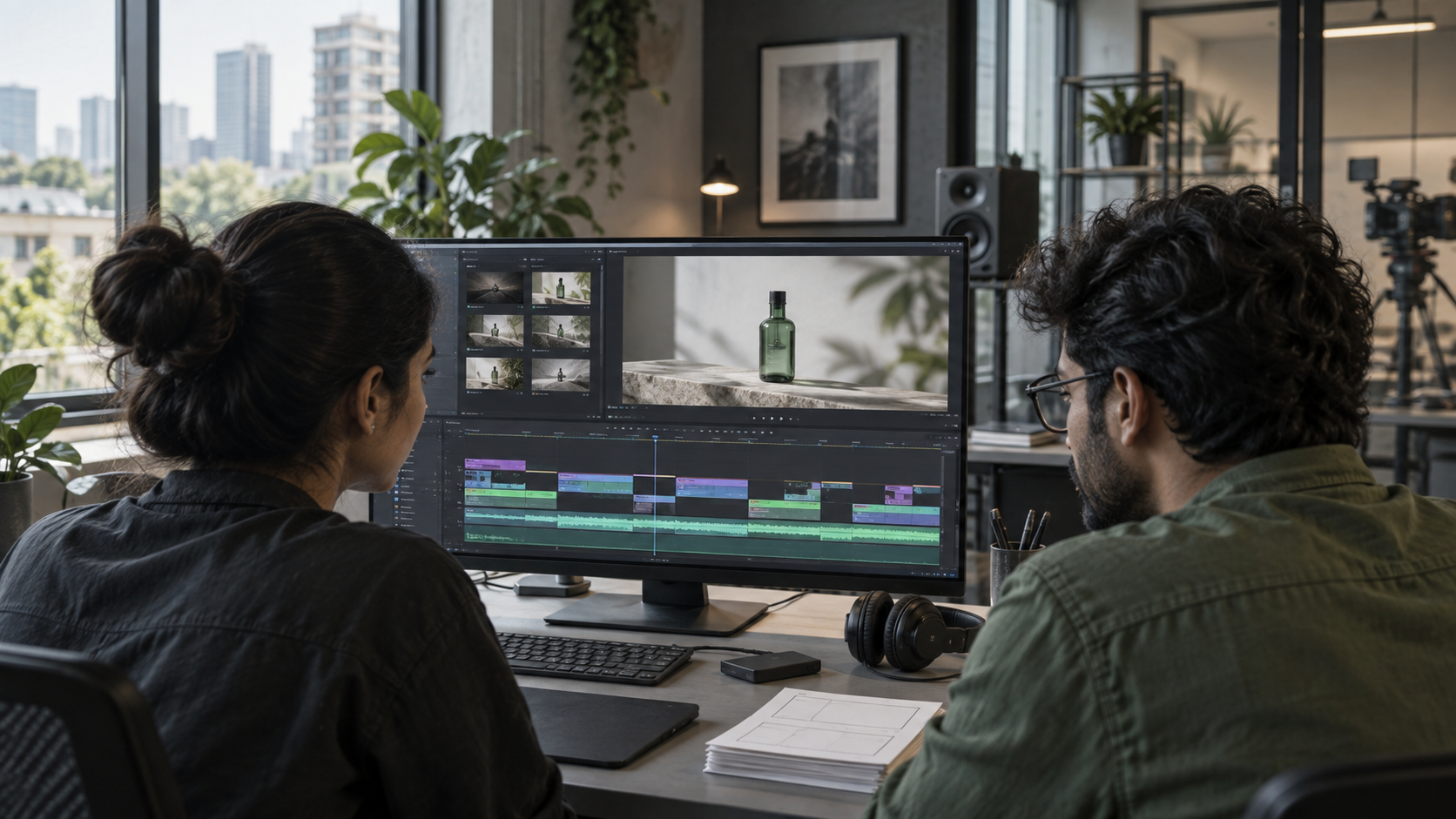
A useful video editing brief tells the agency who the video is for, what the viewer should understand or do, which footage and brand assets are available, and what must be delivered. It should also define formats, deadlines, approval responsibility and revision rounds before an editor starts cutting.
"Make it premium" is a direction, but it is not a complete brief. Two editors can interpret it as completely different choices about pacing, music, typography and colour. The result is unnecessary rework, even when both are technically capable.
For a Noida business or a Delhi NCR marketing team, the brief is the connection between a commercial objective and an editable set of decisions. Use the checklist below when commissioning Reels, founder interviews, product videos or advertising edits.
1. Define the job of the video
Write one sentence naming the audience, message and next step. For example: "Help first-time buyers understand how our product fits into their routine, then encourage them to visit the product page." This is an illustrative brief, not a client case study.
Choose one primary goal rather than asking one edit to introduce the company, explain every feature and close a sale. State where the video will appear: organic social, a website, a sales presentation or paid advertising. The same footage may need different openings and calls to action for each use.
If the message is still unclear, resolve the content strategy before production. Editing can clarify a story, but it cannot supply evidence that was never captured.
2. Send a usable footage and brand pack
Provide original camera files where available, rather than only compressed messaging-app copies. Include separately recorded audio and explain which recordings belong together. Keep one folder structure so the editor does not have to reconstruct the shoot from scattered links.
Footage: group files by shoot date, scene or speaker.
Audio: identify microphone recordings, voiceovers and approved pronunciation notes.
Brand assets: supply usable logos, brand colours, fonts and existing visual guidelines.
Content notes: mark must-use moments, factual corrections and material that must not appear.
References: share a few examples and explain which specific qualities you like.
Distinguish inspiration from copying. "Use a calm interview pace and restrained captions" is actionable. "Make it exactly like this competitor" leaves both the creative direction and the brand's own identity unresolved.
Flag confidential material before sharing it. Confirm that the footage, music and other supplied assets are cleared for the intended use; do not assume an asset used in an organic post is automatically suitable for an ad.
3. Agree on deliverables before the quotation
Ask for an itemised scope, not simply "ten edits." Specify how many distinct stories are required and how many are versions of the same story. A new opening, a new language and a different aspect ratio can each involve additional work.
Record the intended duration, orientation, captions, language versions, thumbnails and final delivery format. Confirm whether colour correction, sound cleanup, motion graphics and caption checking are included. Ask the agency to recommend export settings for the intended destination rather than choosing a file type only because it is familiar.
Also separate final videos from editable project files and source assets. These are different deliverables and should be discussed upfront. Cosette Media's Edit & Deliver service is the relevant starting point for a post-production enquiry. For ongoing production as well as editing, compare the scope with a monthly video content retainer.
4. Use this sample editing brief
Here is an illustrative brief for a business with footage already available:
Audience: potential customers who know the category but not our brand.
Objective: explain one practical benefit and direct viewers to the relevant service page.
Main asset: one short vertical video built around a clear answer from the founder.
Versions: one alternative opening for testing; quote any additional versions separately.
Source material: interview footage, separate audio, product B-roll and an approved logo pack.
Style: natural delivery, clean cuts, readable captions and restrained music beneath speech.
Must include: the approved benefit statement and a clear final call to action.
Must avoid: unverified claims, unrelated stock footage and excessive visual effects.
Approval: one named reviewer consolidates all internal feedback.
Schedule: agree on the first cut, feedback window and final delivery date in writing.
Replace these details with your own requirements. The purpose is to remove ambiguity, not force every business into the same format.
5. Plan reviews and compare quotes fairly
Request feedback in one shared, timestamped list. "At 00:12, replace this shot because the packaging is outdated" gives the editor a precise action and reason. "It feels wrong" usually needs another conversation.
Review the story before polishing minor details. First approve the structure and key message; then review captions, colour, sound and final exports. Confirm the number of revision rounds and distinguish a correction from a new concept or additional deliverable.
When comparing quotes, consider the amount of source footage, the complexity of the edit, version count, turnaround and review process. Do not compare only the final video's duration. A short advertisement with several versions may require more work than a longer, straightforward interview.
For a project-specific editing scope, contact Cosette Media at [email protected] or +91 92115 08493. Share the brief and a representative footage sample so the discussion starts with the actual work, not a generic package.
Frequently asked questions
What should I send a video editing agency first?
Send the audience, objective, intended platform, a representative footage sample, required deliverables and deadline. Add brand assets and reference notes before editing begins.
Can an agency edit footage shot by our own team?
An editing-only project can use client-supplied footage. Ask the agency to assess picture quality, audio, coverage and file compatibility before confirming the scope; some problems may require a reshoot.
Are subtitles, thumbnails and extra formats included?
Only when they are listed in the agreed scope. Specify caption languages, thumbnail quantities and each required format so both sides understand the deliverables.
How many revision rounds should we request?
Agree on a defined number that fits the project, with one person consolidating feedback. Clarify how additional rounds, new concepts and changes after approval will be handled.
How is video editing priced?
Pricing depends on source-footage volume, story development, sound and colour work, motion graphics, versions, turnaround and revisions. Request a quote against a written brief rather than final runtime alone.
By Cosette Media. Cover image is AI-generated editorial artwork, not a photograph of our staff.