By Cosette Media | 27 October 2026
AI brand films can help businesses turn a brand idea into a repeatable visual story, explore settings that would be difficult to shoot, and produce different edits for different audiences. Their value depends on clear positioning, creative direction and distribution. AI-generated visuals alone do not guarantee attention, brand recall or sales.
The useful question is not simply, "Can we make this with AI?" It is, "What should people understand about our brand after watching it?" That distinction separates a collection of impressive clips from a campaign with a purpose.
What Is an AI Brand Film?
An AI brand film uses AI-generated or AI-assisted imagery, video or audio to tell a story connected to a business. It may be entirely generated or combine real product footage, actors and locations with generated scenes. The defining feature is its branding objective, not the tool used to produce it.
A product demonstration explains how something works. A brand film explores why it matters to the audience. Both can belong in the same campaign, but they need different creative decisions.
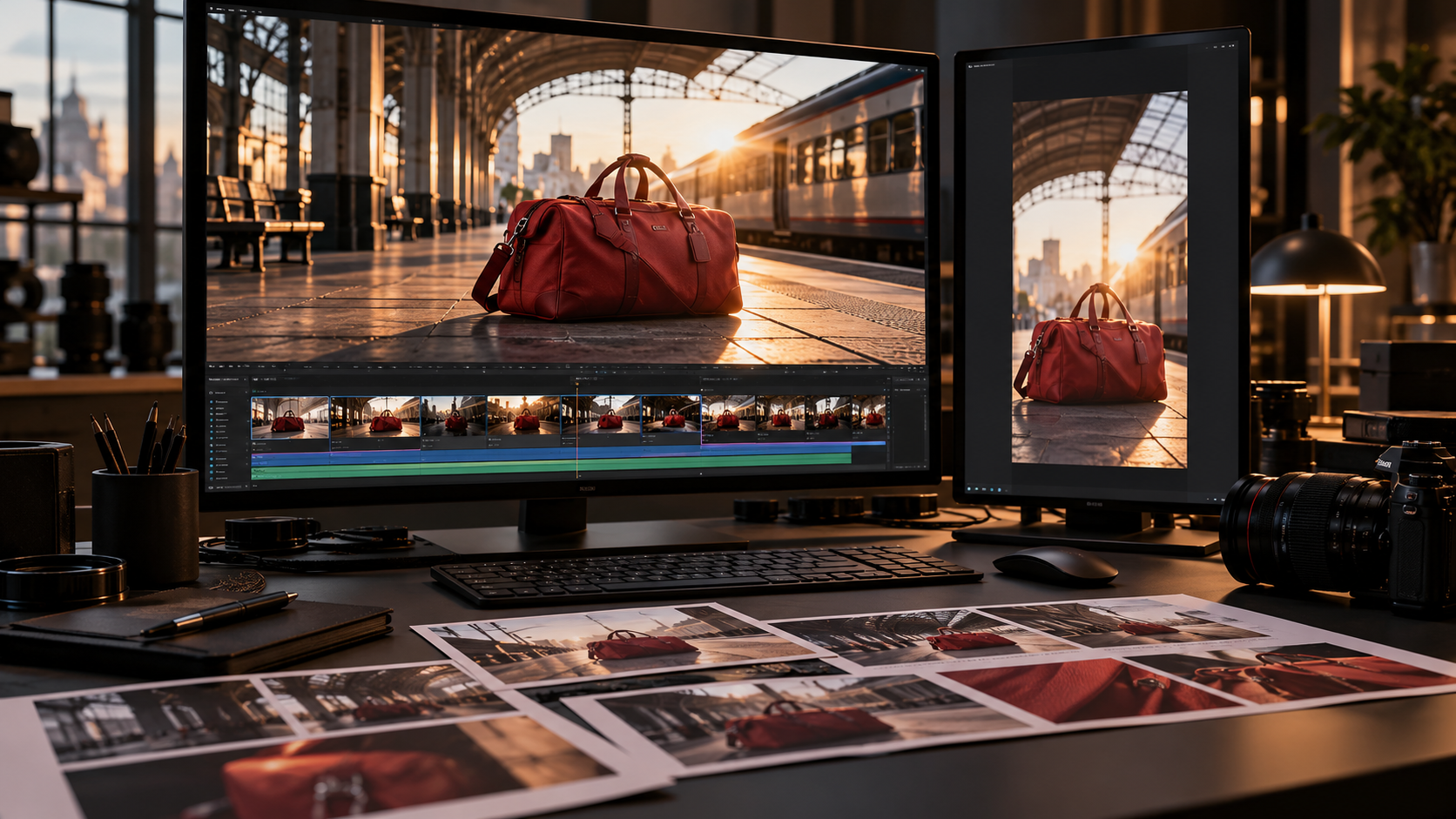
For example, a fictional travel-bag campaign might follow one character through the small frustrations of a working day. The bag earns its place in the story by helping that character stay organised. A sequence of spectacular landscapes with a logo added at the end would communicate something quite different.
How Can AI Films Benefit a Brand?
AI can expand the range of ideas a team can explore without organising a separate physical shoot for every scene. It does not remove the work of scripting, art direction, editing, sound or quality control. It changes where that work happens.
Explore ambitious ideas before committing to production
Generated visual concepts can help a team compare story directions early. A brand can assess whether an imagined setting or character fits its positioning before building a full campaign around it. Early visual exploration is useful only when someone is making decisions against a clear brief.
Develop a recognisable story world
A recurring fictional character can give audiences a reason to recognise the next episode. Its personality, motivations and relationship with the brand matter more than its photorealism. Maintaining the same appearance and behaviour across scenes still requires reference material, careful selection and continuity checks. Our article on AI characters in brand storytelling explores that creative starting point.
Build more useful versions of one idea
A campaign can include a main film, shorter social edits and versions addressing different buyer concerns. This does not mean generating endless unrelated clips. Reuse works best when each version keeps the same brand promise while giving its intended audience a specific reason to care.
For a business serving Noida and Delhi NCR, that might mean separate Hindi and English treatments, or distinct edits for consumer and business buyers. Translation alone is not enough: the situation, wording and tone should feel natural to the audience.
Does AI Video Automatically Get More Reach?
No. AI is a production method, not a distribution guarantee. Reach depends on where the film appears, who it is relevant to, how people respond and whether paid distribution is involved. A strong visual opening may earn attention, but the story must give viewers a reason to continue.
YouTube's official performance guidance explains that recommendations consider audience relevance and viewer response. It also identifies watch time among its engagement signals. These are reasons to design for the viewer, not assume a generated film will receive preferential distribution.
Our practical recommendation is to build a campaign around three questions: Why would someone stop? Why would they keep watching? What would they remember about the brand?
If the answer to the last question is only "the visuals looked expensive," the branding may need more work. A film can be entertaining while leaving the business almost invisible.
How Do You Turn an AI Film Into a Reach Strategy?
Choose one audience and one message. Define the viewer, their situation and the single idea the brand should be associated with. Avoid asking one short film to explain every service.
Give the brand a meaningful role. Connect the product or service to a decision, problem or emotional change in the story. Do not rely entirely on the closing logo.
Plan the placements before generating scenes. A vertical social edit and a website film need different framing, pacing and context. Build those requirements into the storyboard.
Test a clear creative question. Compare two openings while keeping the core message similar. Changing the story, audience, length and placement together makes it difficult to understand what helped.
Give interested viewers somewhere useful to go. Connect the film to a relevant product page, service explanation or enquiry route. The next page should continue the promise made in the film.
Keep organic and paid distribution separate in reporting. Paid reach is not evidence that a film spread organically, and organic views alone do not demonstrate that the right buyers watched.
How Should Brands Measure the Impact?
Use a small measurement plan tied to the campaign objective. Reach describes exposure; retention describes viewing behaviour; brand recall describes memory; enquiries describe an action. These are related, but they are not interchangeable.
Exposure: Review reach or unique-viewer estimates where available, with the platform and reporting period stated.
Attention: Examine watch time and retention to identify where viewers leave. Compare similar formats and lengths.
Brand understanding: Ask viewers what the film communicated and which brand it represented. Treat a small informal check as directional feedback, not a representative brand-lift study.
Useful action: Track relevant page visits and qualified enquiries. Use campaign links and ask prospects how they found the business, while acknowledging attribution gaps.
Agree the reporting window before launch. Avoid adding view totals from different platforms and calling the result unique reach: the same person may appear in more than one audience.
Where Does Cosette Media Help?
Cosette Media brings brand storytelling, AI-assisted production, editing and content planning together. For a brand exploring AI films, the work starts with the audience and message, then moves into story development, visual direction and delivery. Explore our AI-powered content services for the production offering.
A useful project brief should cover the story, approved product references, intended platforms, required versions, review rounds and who owns publishing and reporting. Our editing services and content strategy services support different parts of that process; the agreed scope should specify which are included.
For a practical example of planning before generation, see our Rocksport AI storytelling workflow. It describes the creative process, rather than presenting unverified reach or sales figures.
AI should also be a considered choice. Use real footage when viewers need to inspect the actual product, hear a genuine customer or understand a real-world demonstration. Do not present generated scenes as evidence of product performance or real customer experience. Check accuracy, asset permissions and applicable platform disclosure requirements before release.
The goal is not to make a brand look as though it used AI. The goal is to make its story worth remembering. To discuss an AI film for your business in Noida, Delhi NCR or beyond, contact Cosette Media or email [email protected].
Frequently Asked Questions
Can AI films help a small business build brand awareness?
They can provide another way to communicate a distinctive brand idea, especially when an imagined setting or recurring character suits the message. Start with a focused story and a distribution plan. A smaller business still needs creative direction and quality control.
Are AI brand films cheaper than a traditional shoot?
Not always. AI may reduce some location, casting or shooting requirements, but complex continuity, product accuracy, revisions and post-production can require substantial work. Compare quotes against the same deliverables and quality expectations, not just the production label.
Can an AI brand film go viral?
It can attract widespread attention, but no responsible producer can guarantee virality. Plan for audience relevance, a clear story and measurable learning rather than making a viral outcome the only definition of success.
Should AI replace every brand shoot?
No. Real people, locations and products often provide essential evidence and credibility. Choose AI, live-action or a hybrid approach according to what the audience needs to see and believe.