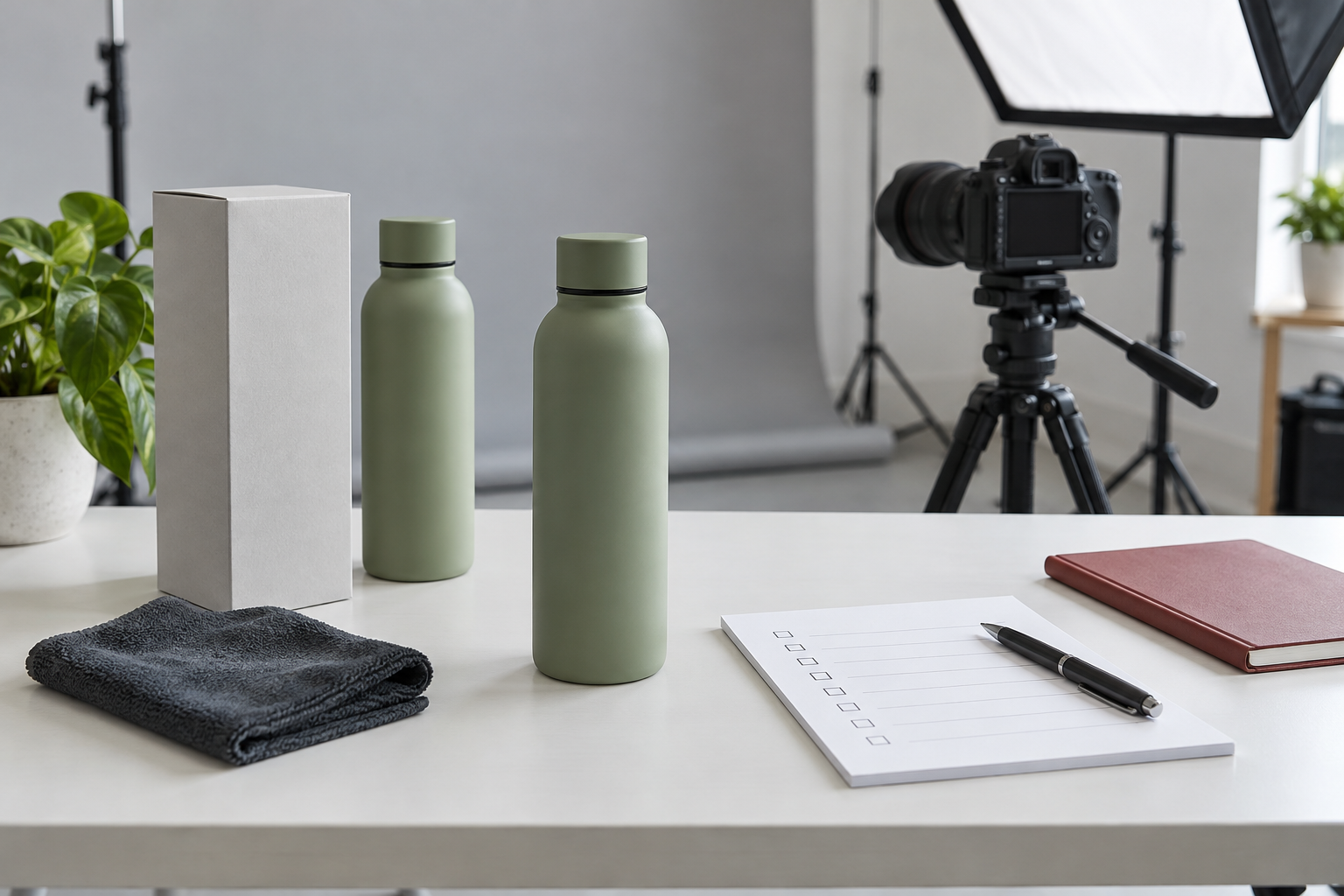
Before a product video shoot, prepare the exact products and packaging that should appear, a working demonstration sample, backups where needed, approved product facts and one person who can resolve questions. Agree on the must-have shots and delivery formats with the production team before the products arrive on set.
A shoot can be carefully lit and still stall because the sample is scratched, the demonstration cannot be repeated or nobody knows which packaging version is current. Those decisions belong before shoot day, not inside the edit.
For brands in Noida, Delhi and Gurugram booking video production, the useful question is not only "What equipment will the crew bring?" It is "What must our team make ready so the crew can show the product accurately?"
1. Separate the camera sample, working sample and reset sample
Our recommended preparation method gives each sample a clear job. The camera sample shows the agreed finish. The working sample supports the demonstration. A reset sample or spare lets the team repeat an action without relying on an already altered item.
One item may do all three jobs, but do not assume that before checking it. An unopened package cannot remain unopened after an unboxing take. A bottle used in a pouring sequence may need cleaning and refilling before the next shot.
Confirm the exact model, size, colour and packaging revision.
Inspect visible surfaces, seams, labels and supplied accessories.
Test the intended action using the actual sample.
Agree how many spares or reset materials the planned sequence needs.
Do not use a prototype as if it proves the appearance or operation of a final product. Tell the production team what is provisional, and decide whether the film needs to wait for the final sample or clearly identify a concept.
2. Decide what the film must show, not just how it should look
Send the production team the intended audience, use and main message. Then identify the shots that make the message understandable: a full view, a detail, an action or a comparison where appropriate.
For example, a product film may need a clear view of how a lid opens. A dramatic silhouette does not answer that question. Conversely, a short brand-led reel may need an emotional situation rather than a complete operating demonstration.
Mark shots as essential or optional. This gives the team a sensible priority if a demonstration or setup takes longer than expected. Explain the purpose of reference videos; use them to discuss framing or pace, not as instructions to copy another brand's creative work.
If the message is still unresolved, our guide to content strategy before a camera shoot covers that earlier planning stage.
3. Rehearse demonstrations and plan the reset
A demonstration needs a beginning, an action and a result that viewers can follow. Test that sequence before the crew arrives. Identify who will operate the product and who knows how to restore it for another take.
Prepare any consumables, charging requirements, tools or replacement parts needed for the agreed action. Flag specialist handling requirements in advance; the camera crew should not be expected to improvise technical operation.
Ask what changes after each take. Does packaging tear? Does the surface become wet? Does the product need cooling, refilling or reassembly? A reset plan is a production requirement, not an editing problem.
Use only demonstrations the product actually supports. Styling and editing should make an action clear, not imply a capability that was never demonstrated or verified. Generated visuals are not substitutes for evidence of actual product performance.
4. Bring approved facts and one decision-maker
Provide the current product name, model information and any factual statements the film is expected to make. Name the person responsible for checking them. If a claim has not been approved by your business, do not ask the editor to turn it into a confident caption.
Supply usable logo files, agreed spelling and relevant visual guidelines. Check packaging and branding together: an old sample label and a new logo file can create a film that looks inconsistent even when each individual asset is clean.
One contact should consolidate shoot-day decisions. Other colleagues can advise on product accuracy, but the crew needs a clear route to an answer. Record changes to the shot list or message so they can be reflected in delivery scope.
5. Confirm arrival, access and delivery versions
For a Delhi NCR shoot, confirm where samples are going, who receives them and when they must arrive for inspection. If products travel from a Gurugram office to a Noida location, account for the handover rather than treating the crew's call time as the courier deadline.
Share practical location details with the production team: access arrangements, available space, operating hours and any limits on moving equipment. Confirm responsibilities for returning products and packaging after the shoot.
Agree on the required horizontal, vertical or other delivery versions before capture. A close-up composed for one frame may leave no useful room for a different crop or captions. Also confirm the number of edits, review process and whether still photographs are separately included.
Our video production quote checklist helps make those deliverables explicit. The readiness checklist here does not replace the agreed production scope.
Discuss a product-led film with Cosette Media
Cosette Media's Story & Screen service brings brief development, scripting, pre-production, shooting and delivery into the production conversation. For a product-led film, share the product, audience, intended use, available samples and required formats so the team can discuss a suitable scope.
The useful pre-shoot handoff is a short written list: sample details, essential shots, demonstration operator, reset materials, factual approver, location contact and delivery versions. Confirm what is ready and assign an owner to anything outstanding.
Contact [email protected] or +91 92115 08493 to discuss your production requirements. Preparation supports a clearer shoot; it does not guarantee views, enquiries or sales.
Frequently asked questions
How many product samples should we bring to a video shoot?
Agree the quantity from the shot list and demonstration needs. A single sample may be enough for simple views, while unboxing, consumable use or repeated actions may require spares or reset materials.
Can we send a prototype instead of the final product?
Tell the production team what differs from the final product. A prototype should not be presented as evidence of final appearance or performance. Agree whether to wait, limit the shots or clearly identify the concept.
Should we plan vertical videos before the shoot?
Yes. Agree the delivery formats before capture so framing, important details and space for captions can be considered. A horizontal shot does not automatically produce a useful vertical edit.
Does preparing the shoot guarantee marketing results?
No. Preparation helps the team capture the intended material accurately. Audience response also depends on the message, distribution, offer and what happens after someone watches.
Cover: AI-generated editorial illustration, not a photograph of a client product or Cosette Media production.