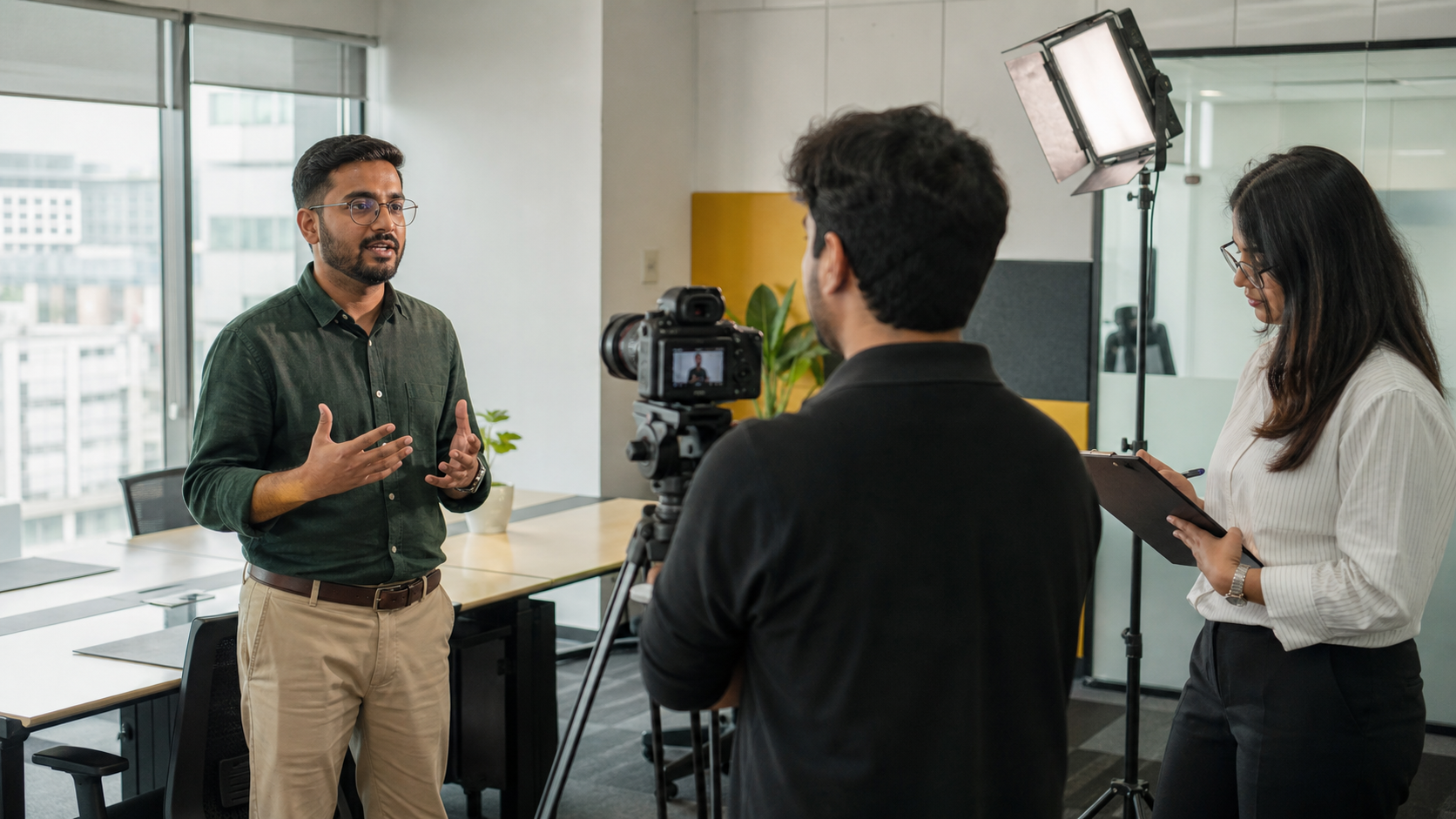
Direct answer: Employee-generated content is useful, experience-based content created with the people inside a company. It helps B2B brands build trust because buyers can hear directly from specialists, operators and client-facing teams. The goal is not to turn every employee into an influencer; it is to make genuine expertise easier to see and understand.
Most B2B companies publish from a single corporate account. The posts are polished, approved and usually forgettable.
Meanwhile, the people inside the company answer valuable questions every day. Sales teams hear objections. Project managers solve delivery problems. Technical specialists understand the details buyers struggle to compare. Customer-support teams know where expectations break down.
That knowledge is already content. It simply needs a responsible system for capturing it.
What Is Employee-Generated Content?
Employee-generated content, often shortened to EGC, includes posts, videos, interviews, explainers, photographs and behind-the-scenes stories featuring employees' real knowledge or experiences.
It is different from asking staff to repost the company announcement with the same caption. Good EGC gives a person something useful and truthful to say.
Examples include:
a media buyer explaining why cost per lead increased;
a producer showing how a shoot is planned before the camera arrives;
a designer comparing two creative routes;
a sales lead answering a common buyer objection;
a project manager sharing a lesson from a difficult delivery;
a new employee describing what surprised them during onboarding.
The content can appear on the employee's profile, the company page, a blog, a sales deck or a short-form video channel.
Why Does Employee Content Build B2B Trust?
B2B services are difficult to judge before purchase. Buyers cannot fully inspect strategy, reliability or judgement from a service list. They look for signals that capable people are behind the brand.
Employee content provides three useful signals.
Visible Expertise
A specialist who explains a problem clearly demonstrates more than a generic claim such as "we deliver excellence." The explanation becomes proof of how the company thinks.
Human Accountability
Showing the people responsible for delivery makes a business feel more real. Buyers can see who might attend the meeting, manage the account or solve the problem.
Wider Distribution
Employees have their own professional networks and conversations. LinkedIn's enterprise guidance encourages companies to reshare employee articles and activate employee voices because their combined networks can extend beyond the company page.
This does not justify compulsory posting. Participation should be voluntary and supported.
Who Should Participate?
Start with people who have useful knowledge and are reasonably comfortable sharing it. They do not need to be senior leaders.
A good first group may include one founder or business leader, one subject-matter expert, one client-facing employee and one operations team member. This mix prevents the brand from sounding as though only the founder has ideas. It also creates content angles across authority, process, customer questions and company culture.
For founder-specific content, Cosette Media's guide to B2B founder videos explains how visible leadership can support better sales conversations.
A Practical Employee Content System
1. Choose Three Editorial Themes
Themes keep content focused. A B2B technology company might choose customer problems, implementation lessons and product education. A real estate firm might choose buyer questions, project progress and market understanding.
2. Interview Before You Script
Do not hand every employee a blank page. Record a 20-minute conversation around questions they answer regularly. The strongest phrases can become a Reel script, LinkedIn post, FAQ or blog section.
3. Use Light Scripts
A script should protect accuracy and structure without removing personality. Bullet points, prompts and short takes usually feel more natural than asking someone to memorise a paragraph.
4. Batch the Production
One monthly shoot can capture multiple experts, topics and formats. A planned session can produce short videos, photographs, quote cards, written posts and clips for the sales team.
5. Give Employees Approval
People should know where their content will appear and have a chance to review sensitive wording. This is especially important for client details, financial claims, legal issues and internal processes.
Cosette Media's Delhi NCR content production team can manage interviews, scripting and production while keeping each person's voice intact.
What Should Companies Avoid?
Employee content becomes uncomfortable when the company treats participation as an obligation or manufactures praise.
Avoid forcing employees to post from personal profiles, writing identical captions for everyone, revealing client information without consent, scripting fake enthusiasm, and using junior employees to make claims outside their expertise.
The safest principle is simple: share knowledge employees genuinely possess, not opinions the brand wants to borrow from them.
How Should EGC Be Measured?
Track business signals alongside engagement:
saves and shares from relevant professionals;
profile visits from target accounts;
inbound messages mentioning a specific employee or post;
sales conversations where content was viewed before the call;
qualified applicants and referral quality;
reuse of employee insights in proposals and nurture emails.
Employee content often influences trust before it receives direct attribution. Add a simple "How did you hear about us?" field and ask sales teams which content prospects mention.
What Does an Employee Content Programme Cost?
Pricing depends on the number of participants, shoot days, videos, written posts and approval requirements. Cosette Media's managed content programmes start from Rs.45,000 + GST and can include strategy, interviews, scripting, production, editing and a monthly distribution plan.
Turn Internal Knowledge Into Market Authority
Your company already contains stories, expertise and proof. The opportunity is to capture them without making employees sound rehearsed or turning the programme into corporate theatre.
Cosette Media helps B2B teams in Noida and Delhi NCR build employee and founder content systems that support LinkedIn visibility, sales trust and long-term brand authority. Email [email protected] or call +91 92115 08493.
Frequently Asked Questions
Is employee-generated content the same as employee advocacy?
They overlap, but they are not identical. Employee advocacy often involves employees sharing company content. Employee-generated content begins with the employee's own expertise, experience or perspective.
Do employees need to post from personal LinkedIn profiles?
No. The company can publish interviews and videos on its own channels. Personal-profile posting should remain voluntary and should reflect the employee's genuine voice.
What if employees are nervous on camera?
Start with an interview, written post, voiceover or short answers rather than a long monologue. Preparation and multiple short takes usually reduce pressure.
Can employee content help SEO and AEO?
Yes. First-hand explanations, named expertise, author information and clear answers can strengthen E-E-A-T signals and give search or AI systems more specific material to understand and cite.
How often should a B2B brand publish employee content?
Two to four strong employee-led pieces per month is a practical starting point. Build consistency before increasing volume, and rotate contributors so the programme represents more than one voice.
Source: LinkedIn's enterprise Pages playbook on employee advocacy.