For brand building in 2027, start with work that has a clear right answer: transcribing an approved interview, finding clips that answer a buyer's question, or adapting a storyboard to a vertical frame. Keep people responsible for what the brand promises, what the audience sees as evidence, and what gets published. The test is whether your team can deliver an equally credible, approved piece of work with less effort.
Imagine a buyer asking, "Will this fit in my kitchen?" AI can help your editor find the moment in a demonstration where the founder gives the dimensions. It should not generate a room that makes the appliance look smaller than it is. The first use saves someone a search. The second risks giving the buyer a reason not to trust you.
Which branding tasks are worth automating first?
Pick a task your reviewer can check against a source: footage, a product specification, an approved script or a pronunciation guide. If nobody can say what a correct answer looks like, settle the brief before automating the work.
Positioning. Use AI to group recurring questions from anonymised sales notes. Choose which buyer to serve and what evidence supports the promise.
Film planning. Use AI to sketch alternative settings for an approved scene. Decide what the viewer should understand and what must be filmed.
Social content. Use AI to find candidate clips in a transcript and draft captions from the approved wording. Watch the original exchange. A short edit must not turn a qualified answer into a guarantee.
Local adaptations. Use AI to prepare a first Hindi or English caption pass. Check the voice, product terms and call to action in the language customers actually use.
A founder can do this with one interview and a list of questions customers asked last week. A corporate marketing team can use the same approach, but should name one product reviewer before generating variants. Otherwise, five versions of an unapproved claim produce five corrections. Use only materials your team is authorised to share with the chosen tool.
How do you know whether AI actually saved time?
Time the work from brief to approval, not from prompt to first draft. Pick two comparable pieces with the same format, review standard and level of difficulty. Use the usual process for one. For the next, change only one step, such as caption drafting. Record two things separately: total minutes people worked and elapsed time until the piece was approved.
Illustrative example, not a client result: An editor spends 80 minutes drafting captions and a reviewer spends 20 checking them: 100 person-minutes. On a comparable reel, AI-assisted drafting takes 25 minutes, corrections take 40 and review takes 20: 85 person-minutes. The saving is 15 minutes, not 55. If both reels wait until Friday for sign-off, the team saved effort but did not publish sooner.
Repeat the comparison before expanding it. Track rejected versions and factual errors alongside time. An extra hour spent correcting the product colour can wipe out the saving from several quick caption drafts. And time saved is a production result, not evidence that the campaign brought in customers.
When should a brand film use real footage, AI or both?
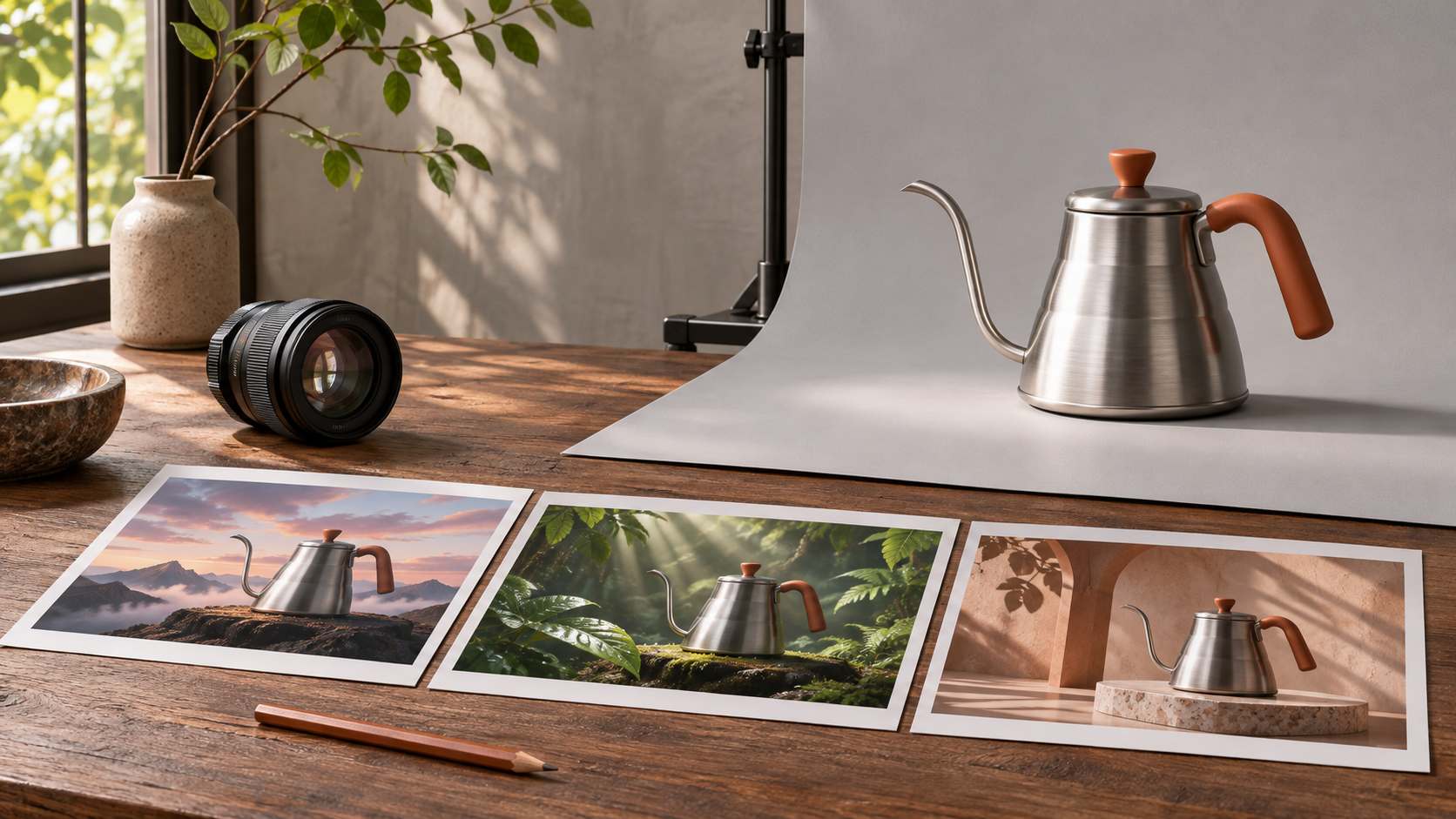
Choose the production method scene by scene. Film the proof: a machine completing a cycle, a founder explaining a design choice, or a real customer describing their experience with permission. Generate the imagined setting: a visual metaphor, a fictional character or a concept the audience is not being asked to accept as documentary evidence. Use both when the distinction is clear.
For example, a Noida manufacturer planning a distributor launch across Delhi NCR could film its actual machine and operator once. From that shoot it could create a Hindi explainer for sales conversations and an English demonstration for the product page. A generated opening might illustrate the problem the machine solves. When the film shows speed, fit or finish, cut back to the real machine. That is where a buyer needs evidence, not illustration.
What the Rocksport reels show about brand direction
For Rocksport, our starting point was a relationship between two colleagues, not a list of adventure activities. Character references and storyboards connected the office scenes to an outdoor challenge. The rope mattered because one person held it for the other. Without that connection, the same scenery could advertise almost any outdoor venue.
The two reels were published organically, without boosting. You can see the development material and links to the finished reels in Cosette Media's Rocksport workflow. It illustrates a creative choice, not a measured claim about hours saved, sales or reach.
How Cosette Media can help plan your first pilot
Bring our Noida team one product, one recurring customer question and one example of content that took too long to approve. A useful first brief names the shot that must be real, the step worth automating, the person who can reject a misleading version and the action the viewer should be able to take afterwards.
Our AI-assisted content and film production work can cover storyboards, scripting and format adaptations. For a pilot, agree on one finished asset before commissioning a month's worth of variations. Review the approved edit, the time record and the response from the people who use it. For a sales film, one useful question is: did the next buyer understand the product well enough to ask for a demonstration?
Frequently asked questions
What is the safest first AI task for a small brand?
Start with a transcript or caption draft from your own approved footage. It is easy to compare with the source, inexpensive to correct, and useful even when you publish only one video.
Should we automate content production or fix approvals first?
If finished drafts spend days waiting for a decision, fix approvals first. Name a reviewer and agree on what they need to check. Faster drafting will not shorten a queue that nobody owns.
How should we compare proposals from AI branding agencies?
Give each agency the same brief. Ask which scenes will be filmed or generated, who checks factual claims, how revisions are handled and which files you receive. Compare the price of an approved, usable deliverable, not the number of variations promised.
Discuss a brand-building pilot with Cosette Media or email [email protected].