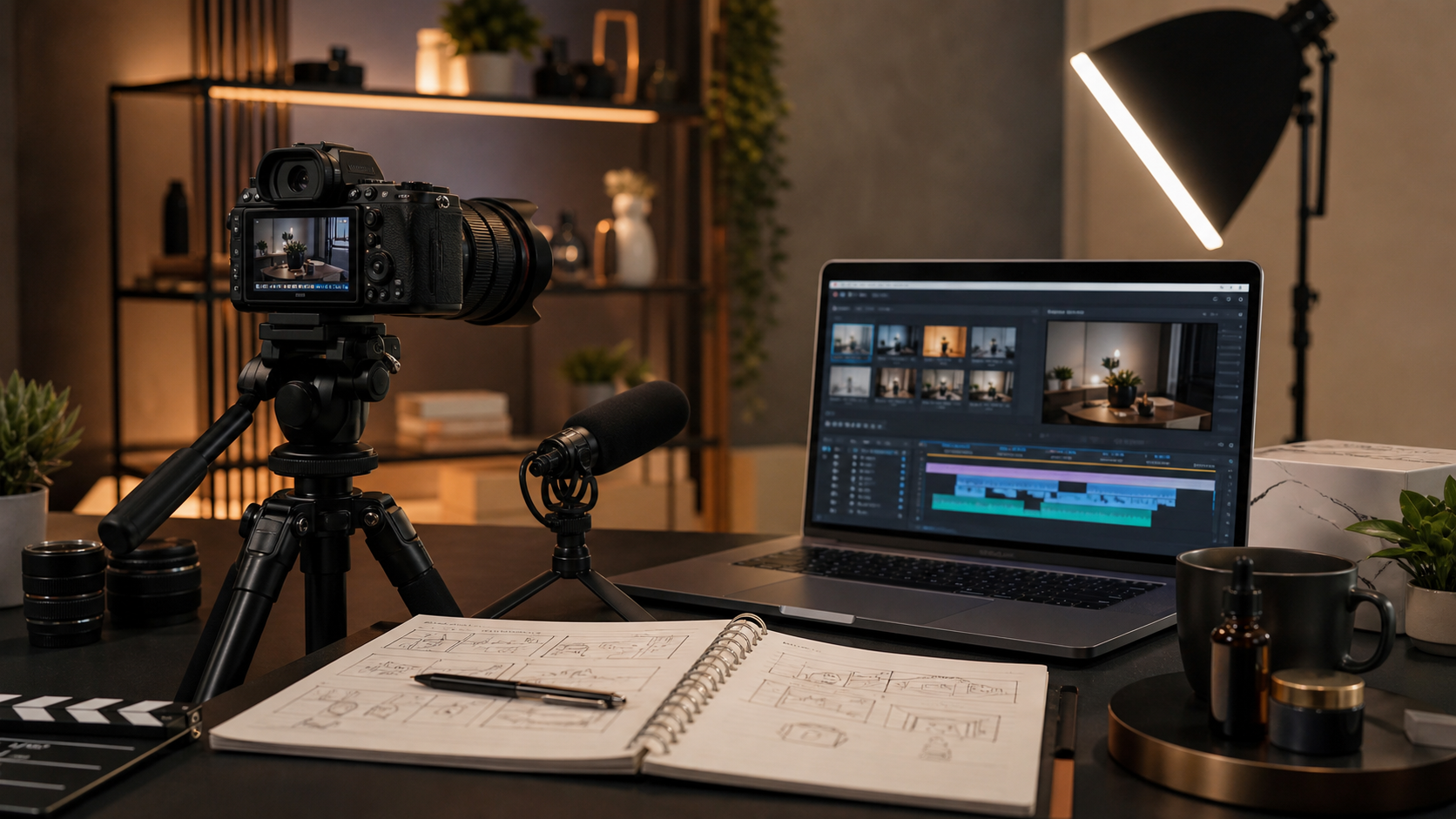
You do not need a full production house to create a high-quality brand video. You need a clear idea, a tight shoot plan, good lighting, clean sound, and an editing workflow that knows what the final video is supposed to do.
That matters because many Indian brands delay video content for the wrong reason. They imagine a large crew, expensive sets, three camera operators, and a production budget that only makes sense for a television commercial. But most brand videos that perform well online are not built that way.
They are built with sharper planning.
At Cosette Media, we often work lean: a compact camera setup, a small crew, a clear content brief, and a shoot structure that gives us enough material for the main video, social cuts, reels, thumbnails, and paid ad variations. This guide explains the exact thinking behind that process.
What Makes a Brand Video Feel High Quality?
High quality does not only mean expensive equipment. A video feels high quality when the viewer understands the story quickly, trusts what they are seeing, and stays interested long enough to take the next step.
For most brands, quality comes from five things:
- A clear message
- Strong visual composition
- Good lighting
- Clean audio
- Editing that respects attention span
If any one of these is weak, the video starts to feel amateur even if it was shot on an expensive camera. A beautifully shot video with no point will not convert. A strong testimonial with bad audio will lose trust. A good product demo with slow editing will get skipped.
High-quality brand video production is not about showing everything. It is about showing the right things in the right order.
Start With the Business Goal, Not the Camera
The first question should never be, "Which camera are we using?" The first question should be, "What should this video achieve?"
A brand video can have different jobs:
- Explain what the company does
- Build founder trust
- Show a product in use
- Capture an event or launch
- Generate leads from paid ads
- Support a landing page
- Recruit talent
- Turn a customer story into proof
Each goal changes the video. A founder story needs emotion and authority. A product demo needs clarity. A real estate walkthrough needs space, location, and buyer confidence. A paid ad video needs a hook in the first three seconds.
When the goal is unclear, the shoot becomes a collection of random clips. When the goal is clear, every shot has a job.
Our Lean Brand Video Production Framework
We use a simple framework before every lean shoot: Message, Moments, Movement, Multiplication.
1. Message
The message is the one idea the viewer should remember after the video ends.
For example:
- "This real estate project is built around location convenience."
- "This founder understands the customer problem personally."
- "This product saves time without making the workflow complicated."
- "This brand is premium, but still approachable."
If the team cannot say the message in one sentence, the video will usually become too broad. A broad video is hard to shoot, hard to edit, and hard to remember.
2. Moments
Moments are the proof points that make the message believable.
For a brand film, those moments could be founder lines, team interactions, product close-ups, customer use cases, packaging shots, location details, or before-and-after results. For a real estate brand, moments could include entrance shots, amenities, balcony views, construction progress, sample flat walkthroughs, and neighbourhood access.
We plan these moments before the shoot so the final edit does not depend on luck.
3. Movement
Movement keeps the video alive.
This does not mean every shot needs dramatic camera motion. Sometimes movement is a person walking into frame, a product being opened, a hand moving through fabric, a slider shot across a workspace, or a slow push-in during a founder line.
Static shots can work, but online video usually needs visual rhythm. Movement gives the editor more energy to work with.
4. Multiplication
Multiplication means planning the shoot so one production day creates more than one asset.
A single shoot can give you:
- One main brand video
- Three to five short reels
- Paid ad cutdowns
- Founder clips
- Behind-the-scenes content
- Website hero visuals
- Thumbnail images
- LinkedIn post assets
This is where lean production becomes powerful. The cost of the shoot stays controlled, but the output multiplies across platforms.
The Gear Matters, But Only After the Plan
A lean setup can still look premium when the basics are right. For many shoots, a camera like the Sony A7III, a fast lens, a stable tripod or gimbal, a compact light setup, and reliable audio are enough to create a professional result.
The exact gear can change, but the priorities stay the same:
- Camera that handles low light well
- Lens choice that fits the space and mood
- Stable framing
- Soft, controlled lighting
- Clean microphone audio
- Enough battery and storage for the full shoot
Brands often overestimate the camera and underestimate the environment. A decent camera in good light will usually look better than an expensive camera in bad light. A simple interview with clean audio will feel more credible than a cinematic shot where the voice sounds distant.
Pre-Production Is Where the Money Is Saved
The fastest way to waste money on video is to arrive at the shoot without a plan.
Before filming, we lock:
- Objective
- Target audience
- Primary message
- Shot list
- Interview questions
- Location requirements
- Wardrobe or product prep
- Deliverable formats
- Publishing platforms
This does not make the shoot stiff. It makes it efficient. A planned shoot leaves more room for spontaneous moments because the important shots are already protected.
For example, if we are shooting a founder-led brand video, we do not ask generic questions like "Tell us about your company." We ask questions that create usable lines:
- What problem made you start this brand?
- What do customers misunderstand about this category?
- What makes your process different?
- What would you tell someone comparing you with cheaper options?
- What result do you want customers to feel after working with you?
Better questions create better edits.
Lighting Makes Lean Production Look Expensive
Lighting is one of the biggest differences between amateur and professional video.
You do not always need a large lighting rig. You need control. That can mean using window light properly, turning off ugly overhead lights, adding one soft key light, using a practical lamp in the background, or moving the subject away from a flat wall.
Good lighting does three things:
- Shapes the subject
- Separates the subject from the background
- Creates mood without distracting from the message
For brand videos, we usually avoid lighting that feels too dramatic unless the brand calls for it. Most businesses need a look that feels polished, warm, and trustworthy.
Audio Is the Trust Signal People Notice Late
Viewers may not consciously think about audio, but they feel it immediately.
Bad audio makes a video feel cheap. Echo, background noise, scratchy microphones, low volume, and uneven levels all reduce trust. This is especially important for founder videos, testimonials, educational content, podcasts, and B2B explainers.
A lean shoot should still treat audio seriously:
- Use a proper lavalier or shotgun microphone
- Record a test before the real take
- Check for air conditioner noise
- Avoid empty echo-heavy rooms
- Capture room tone
- Monitor levels during recording
Clean sound makes even a simple video feel more expensive.
The Shoot Day System
On shoot day, we usually structure the work in layers.
First, we capture the core talking points or main scenes. These are the shots the video cannot exist without. Next, we capture supporting visuals: product details, team movement, workspace shots, location footage, process steps, and cutaways. Finally, we capture social-first clips that may not appear in the main video but are useful for reels and ads.
This prevents a common problem: spending too much time on beautiful extra shots and running out of energy for the main story.
A simple shoot day order can look like this:
- Location check and lighting setup
- Audio test
- Main interview or founder lines
- Product or process shots
- Team and environment B-roll
- Vertical social clips
- Thumbnail and still frames
- Backup footage before leaving
The backup step matters. No one wants to discover missing footage after the location is gone.
Editing Is Where the Brand Video Becomes a Story
The edit decides whether the video feels focused or scattered.
Our editing process usually starts with the strongest narrative spine. For a founder video, that might be the clearest answer from the founder. For a product video, it might be the customer problem. For a real estate video, it might be the buyer's decision path: location, lifestyle, trust, next step.
Once the spine is clear, we add:
- B-roll that supports the line being spoken
- Text overlays only where they improve clarity
- Music that fits the brand, not just the trend
- Rhythm changes to hold attention
- Shorter versions for social and paid ads
The biggest editing mistake is trying to keep everything. A strong edit removes good footage so the best footage can breathe.
How One Shoot Becomes a Content System
A brand video should not live only as one YouTube upload or one homepage asset.
From one shoot, a brand can publish:
- A main website brand video
- A 30-second Instagram Reel
- A 15-second paid ad
- A LinkedIn founder clip
- A carousel explaining the process
- A blog header image
- A newsletter visual
- Short testimonial snippets
This is why we plan multiplication before the camera turns on. If the shoot is planned only for one final video, the team misses dozens of useful assets.
For brands trying to stay consistent online, this approach is often more practical than doing a new shoot every week.
When Do You Actually Need a Full Production House?
There are times when a full production house makes sense.
You may need a larger crew if the project involves:
- Large commercial sets
- Multiple actors
- Complex art direction
- Heavy lighting setups
- Motion control or advanced camera rigs
- High-end product films
- Television or cinema distribution
But most online brand videos do not need that level of production. They need a strong concept, a capable lean team, and a clear distribution plan.
The right question is not, "How big should the crew be?" The right question is, "What level of production does this business goal actually require?"
Common Mistakes Brands Make With Video
Trying to Say Too Much
A single video cannot explain every service, every feature, every benefit, and every founder belief. Pick the main message and build around it.
Copying Trends Without Strategy
A trending audio or editing style can help reach, but it cannot replace brand thinking. Trend-first videos often get attention without building trust.
Ignoring Vertical Formats
If the video will be used on Instagram, YouTube Shorts, or paid social, vertical framing should be planned during the shoot. Cropping later is not always enough.
Leaving Distribution Until the End
Before editing starts, decide where the video will be used: website, Instagram, LinkedIn, ads, email, landing page, or sales deck. The platform changes the cut.
Skipping Captions
Many people watch without sound, especially on social platforms. Captions improve accessibility and retention.
Final Takeaway
High-quality brand videos do not always require a full production house. They require clear strategy, good planning, strong basics, and an editing process built around attention.
For Indian brands, this lean approach is often the most realistic way to create consistent video content without waiting for huge campaign budgets. Start with the message, plan the moments, capture movement, and multiply the output.
Cosette Media helps brands create video content that works across websites, social media, and paid campaigns. If you want to turn one shoot into a full content system, book a video content consultation with Cosette Media.
Frequently Asked Questions
Can a small team produce a professional brand video?
Yes. A small team can produce a professional brand video if the concept, lighting, sound, shot list, and editing workflow are handled properly. Crew size matters less than planning and execution.
What is the most important part of brand video production?
The most important part is clarity of message. If the video does not know what it is trying to communicate, better cameras and editing will not fix it.
How long should a brand video be?
For websites and social media, most brand videos work best between 45 seconds and 2 minutes. Paid ad cutdowns can be shorter, often 10 to 30 seconds.
Do brand videos need captions?
Yes. Captions help viewers understand the video when watching without sound and also improve accessibility.
How can one video shoot create more content?
Plan the shoot for multiple formats from the start. Capture the main video, vertical clips, B-roll, founder lines, product shots, and still frames during the same production day.
About the Author
Harry is the founder of Cosette Media, a performance marketing and content creation agency based in India. He works with D2C brands, real estate developers, and B2B companies on paid advertising, video content, and growth strategy. When he is not running campaigns, he is building the content systems he writes about here.